


Sharks International 2026 in Sri Lanka
Updated: Aug 25
At the beginning of May, Knut, Robert, and Lotte excitedly attended Sharks International 2026, which is only hosted every fourth year. Sharks International was hosted for its fifth time - this time in Colombo, the capital of beautiful Sri Lanka. The conference brought together students, researchers, conservationists, and policy experts from across the world to share knowledge on sharks, rays, and chimaeras. As the largest conference dedicated to shark, ray, and chimaera science, Sharks International creates a great platform for exchanging cutting-edge research and building collaborations. This year’s meeting was particularly special, marking the first time the conference was hosted in Asia and welcoming several hundred participants representing a diverse range of disciplines, ecosystems, and perspectives.

The programme was packed with engaging keynote talks, presentations, and posters, covering an variety of topics. From tropical coral reefs, to deep water habitats, and coastal fjords, the conference highlighted how shark and ray research spans an enormous diversity of habitats. Equally broad were the methods presented, ranging from field ecology and behavioural experiments to modelling, genomics, and conservation policy.

We were also excited about presenting some of our work from the LOST project where
we track spiny dogfish in the fjords outside of Bergen. Knut presented a poster on the thermal preferences of spiny dogfish in fjords, exploring how these sharks interact with temperature gradients in their environment. Lotte had a speed talk introducing work on oxygen selection probabilities in spiny dogfish, highlighting how dissolved oxygen levels may influence habitat use and behaviour. Robert also presented a poster where he compared activity levels of different species, including spiny dogfish and thornback rays, that gave interesting insight into species differences in diurnal and seasonal patterns. Together, these studies add to a growing understanding of how environmental factors, particularly temperature and oxygen, as well as time shape the ecology of these widely distributed and ecologically important species.
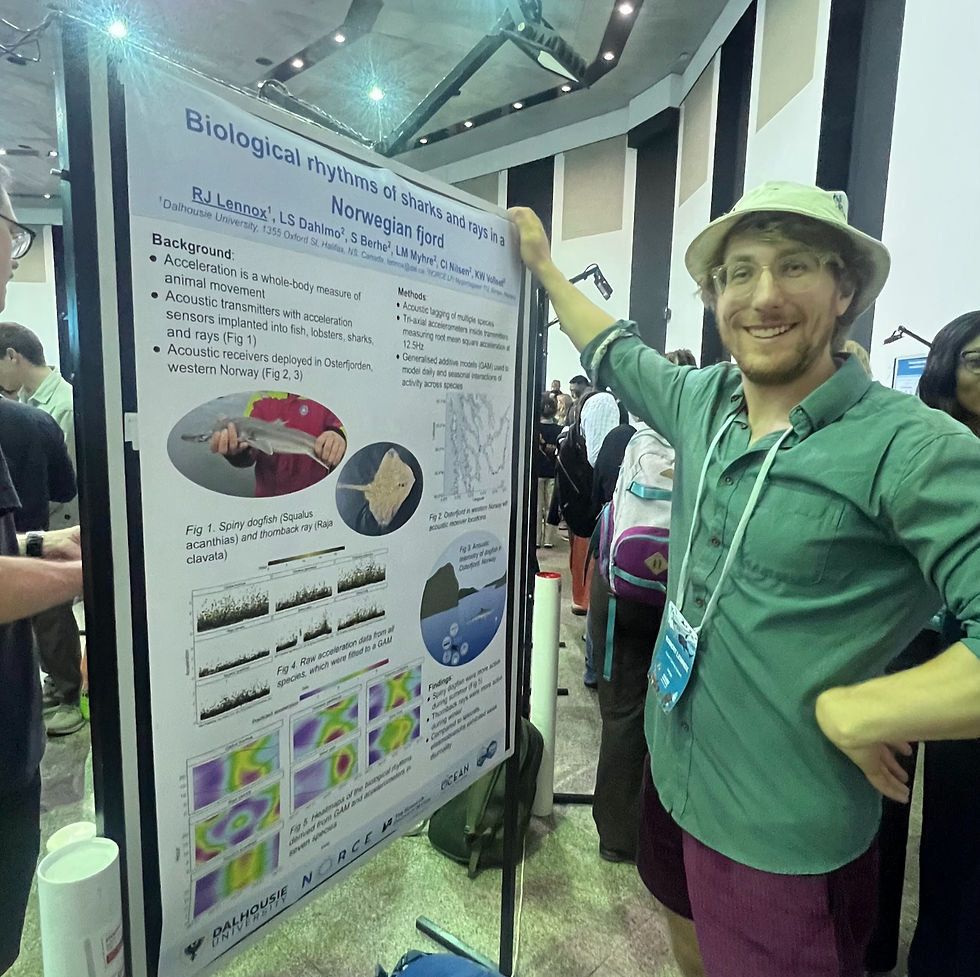
Beyond the science, attending conferences is a great opportunity to expand your network and reconnect with familiar faces. It was wonderful to reconnect with old friends, many of whom we had not seen since the previous Sharks International or other conferences, as well as to meet new colleagues and potential collaborators from around the world. The discussions continued long after sessions ended—over coffee breaks, poster sessions, and shared meals. These informal conversations are often where new ideas take shape, and this meeting was no exception.

Most of the board members of the newly formed EEA Early Career Researcher Committee attended the conference and were able to meet up and discuss next steps to creating an environment for early career researchers working on sharks, rays and chimaeras! Keep an eye out for updates in the coming months.

The conference days were full and inspiring, but also balanced with great food, vibrant surroundings, and opportunities to experience Sri Lanka’s culture - taking a tuktuk is an interesting experience. The combination of high-quality science and a welcoming, social environment made for a truly memorable week. As always, we return from Sharks International feeling energised and inspired—bringing home new ideas, perspectives, and connections.
This attendance was funded, in part, by the Norwegian Research Council through the LOST project (325830).


Comments