


New paper - Tracking Atlantic cod in a changing Arctic: New insights from Svalbard's fjords
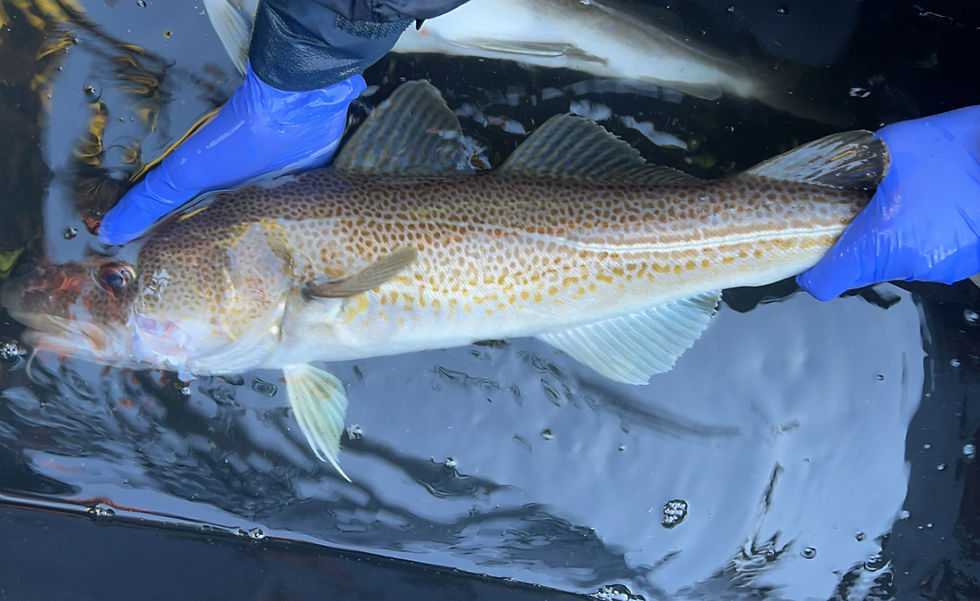
In our new study, we used acoustic telemetry to investigate how Atlantic cod (Gadus morhua) are using Arctic fjord habitats in Svalbard, and what their movements can tell us about the changing Arctic marine environment.
The Arctic is warming rapidly, and one of the most visible consequences is Atlantification, the increasing inflow of warm Atlantic water into Arctic regions. Along the west coast of Svalbard, these changes are creating new opportunities for boreal species such as Atlantic cod to expand their distribution northwards. Understanding when and how cod use Arctic fjords is therefore important for predicting how climate change may reshape Arctic ecosystems and affect native species such as polar cod (Boreogadus saida).

By using acoustic telemetry, we tracked 27 Atlantic cod in Isfjorden, Svalbard, over a one-year period from August 2023 to August 2024. The tagged cod showed clear seasonal changes in behaviour, occupying deeper waters during winter and moving closer to the surface during summer. We also found that cod were most frequently detected along the shoreline areas of the fjord.
The study revealed that some individuals left Isfjorden during the winter months and did not return during the monitoring period, suggesting that the fjord may be used seasonally rather than year-round by part of the population. These findings provide new insights into how Atlantic cod are adapting their behaviour in Arctic environments.
By combining telemetry with genomic analyses, we found evidence that the tagged fish included both individuals genetically similar to the non-migratory Norwegian coastal cod and fish carrying genetic signatures associated with the migratory Northeast Arctic cod.
Our findings suggest that the use of Arctic fjords by Atlantic cod may be evolving as ocean conditions change. As Atlantification continues, species distributions, migration patterns, and predator-prey interactions are likely to shift, with important consequences for Arctic food webs and ecosystem dynamics.
This work was funded by the Norwegian Research Council through the NICE (NFR 134561) and ROPES (NFR 358617) projects.


Comments